To speak of Granada is to evoke centuries of history, a rich culinary tradition, remarkable art, and dramatic landscapes crowned by the peaks of Sierra Nevada rising behind the iconic Alhambra.
But Granada is also the heir to traditional crafts, artisanal techniques, and unique pieces that remain alive centuries later. Perhaps your first impression of the city does not include some of the fascinating facts and cultural curiosities that shape Granada’s identity — details that can make your visit even more meaningful.
Beyond palaces and ancient walls, Granada preserves a cultural heritage you can still touch: ceramics, furniture, and woodwork that quite literally tell thousand-year-old stories.
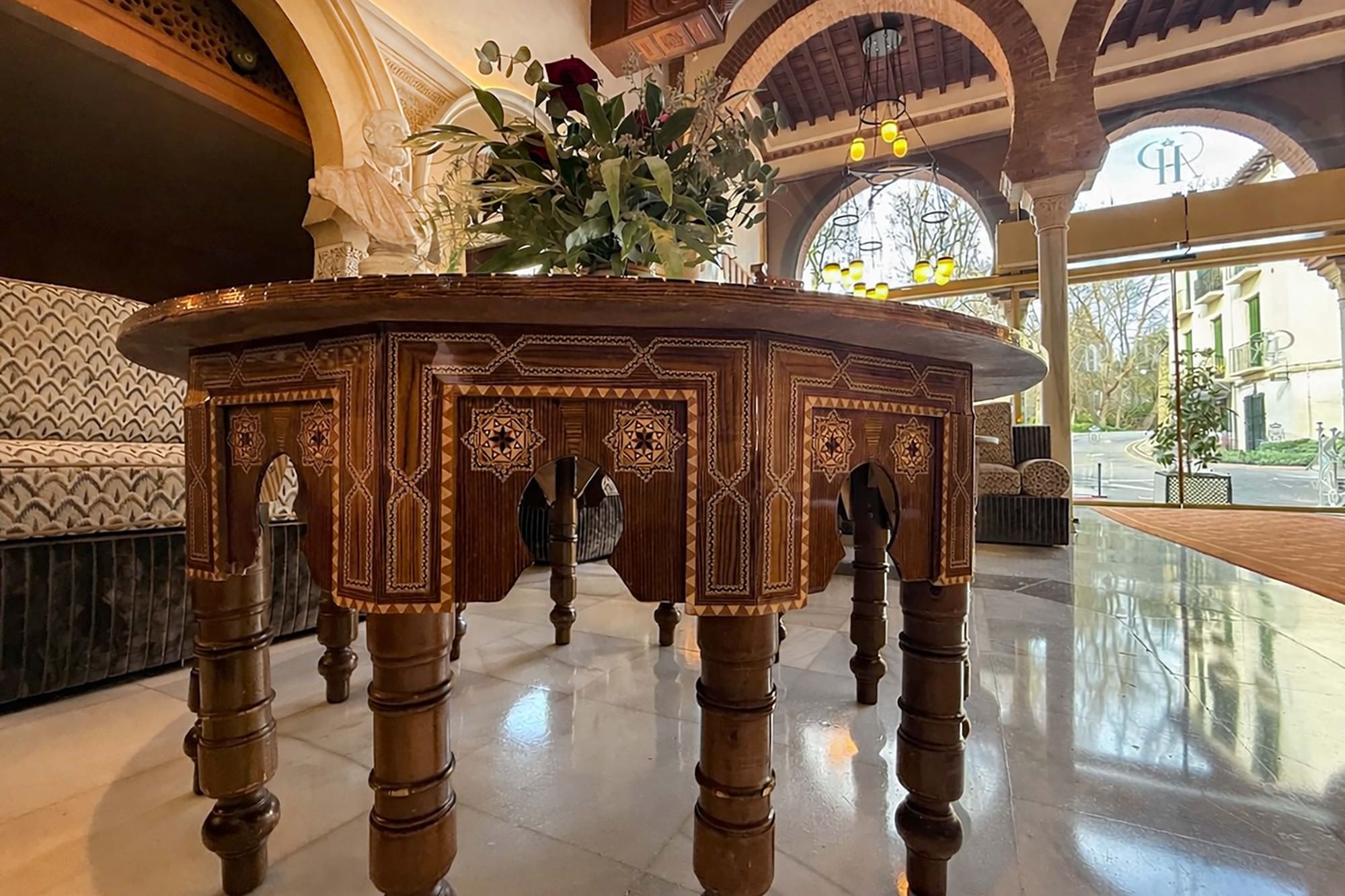
And if you visit Granada and stay at the Hotel Alhambra Palace, you will be sleeping in the heart of that historic legacy, surrounded by subtle references to this rich tradition — from our aesthetic and cuisine to our furniture and many carefully curated details.
Granada Ceramics: Art in Your Hands
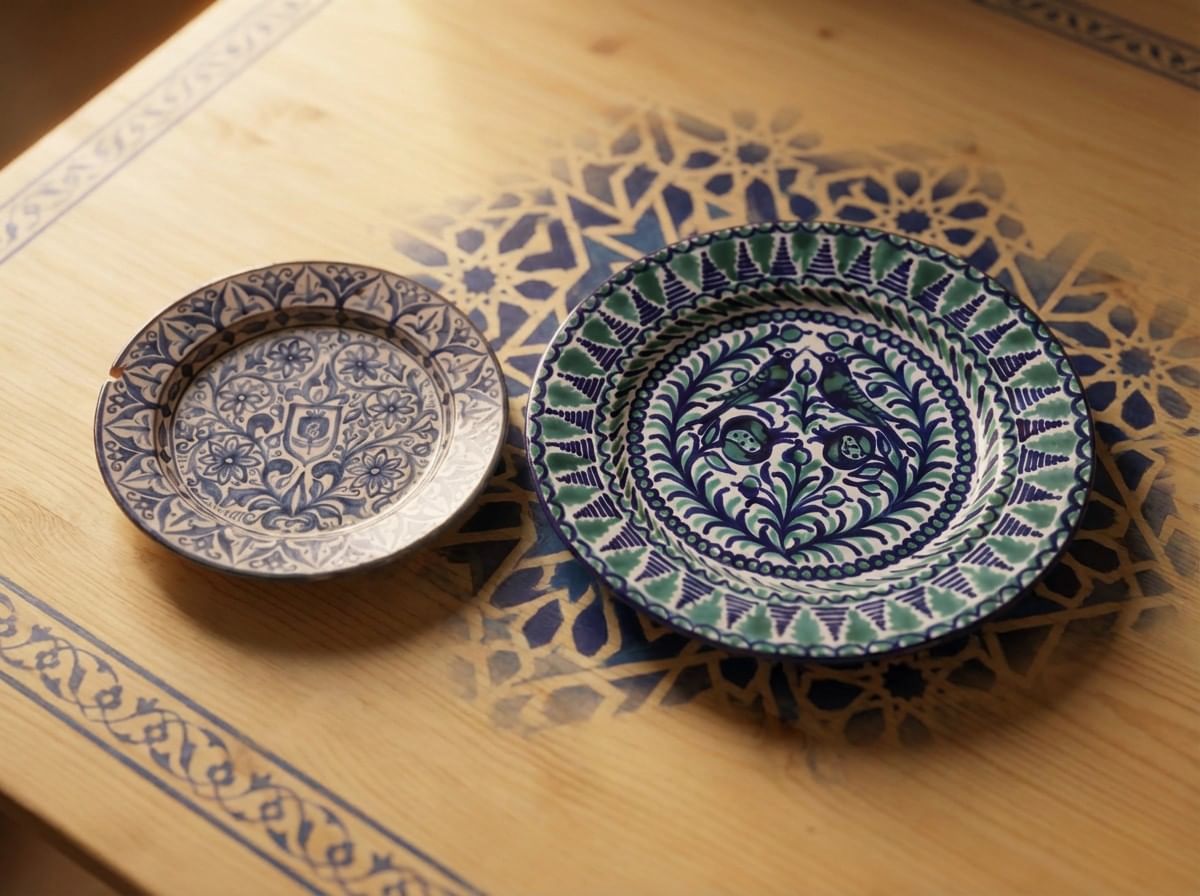
One of the most recognizable symbols of Granada´s craftsmanship is Fajalauza pottery. But what exactly is Fajalauza ceramics? You may not have heard of it before, although you have probably seen it more often than you realize, and not only in Granada!
It is so deeply rooted in the city’s culture that during recent influencer gatherings held in Granada, the authentic authentic Fajalauza factory became one of the chosen venues to showcase the traditional and artistic production process behind this unique craft.
Its origins date back to the 16th century, following the arrival of Morisco potters in the Albaicín district. Its name comes from the old Puerta de Fajalauza, one of the gates in Granada’s medieval walls.
How can you recognize it?
- Its distinctive cobalt blue color
- Decorations featuring pomegranates, birds, and vegetal motifs
- Islamic influence blended with Renaissance Christian aesthetics
For centuries, this pottery has been present, and continues to be present in homes, convents, and palaces. What makes it truly remarkable is that Fajalauza is still produced today, preserving processes that are almost identical to those used in the 17th century.
Granada Taracea: Geometry Inherited from Al- Andalus
Much of the aesthetic we admire in Granada today — in traditional houses and courtyards — is directly inspired by the decorative patterns of the Alhambra. Its architecture undoubtedly influenced domestic furniture design.
Today, chests, tables, and small decorative boxes featuring taracea remain iconic pieces representing Granada’s cultural identity.
Taracea is an Andalusian artisanal technique inherited from the Nasrid period, highly sophisticated and characteristic of the decorative style found in the Alhambra. At the Hotel Alhambra Palace, it is naturally present in our geometric tables, meticulously crafted down to the smallest detail. You will also find it in our rooms, where you can almost imagine the artisans at work during the creation process.
This technique flourished during the Nasrid Kingdom of Granada and remains a living tradition today. It consists of assembling fine sheets of different materials into intricate geometric designs, which are then inlaid into furniture, jewelry boxes, and decorative objects. Wood, bone, and mother-of-pearl come together to create unique pieces of extraordinary artistic value.
Granada became one of the main centers of taracea production in Spain, particularly in the Albaicín district.
The Scissor Chair: The Jamuga
You have probably seen them in a museum. But do you know what scissor chairs, or jamugas, are?
Scissor chairs, also known as faldstools or ceremonial chairs, have medieval origins and were symbols of authority. Their X-shaped structure allowed them to fold and be easily transported, making them common during military campaigns and official ceremonies.
Why were they so important?
Because they were used exclusively by high-ranking individuals and symbolized both political and religious power. Over time, their design evolved with the decorative influence of taracea craftsmanship.
At the Hotel Alhambra Palace, you can find several examples of these historic pieces:
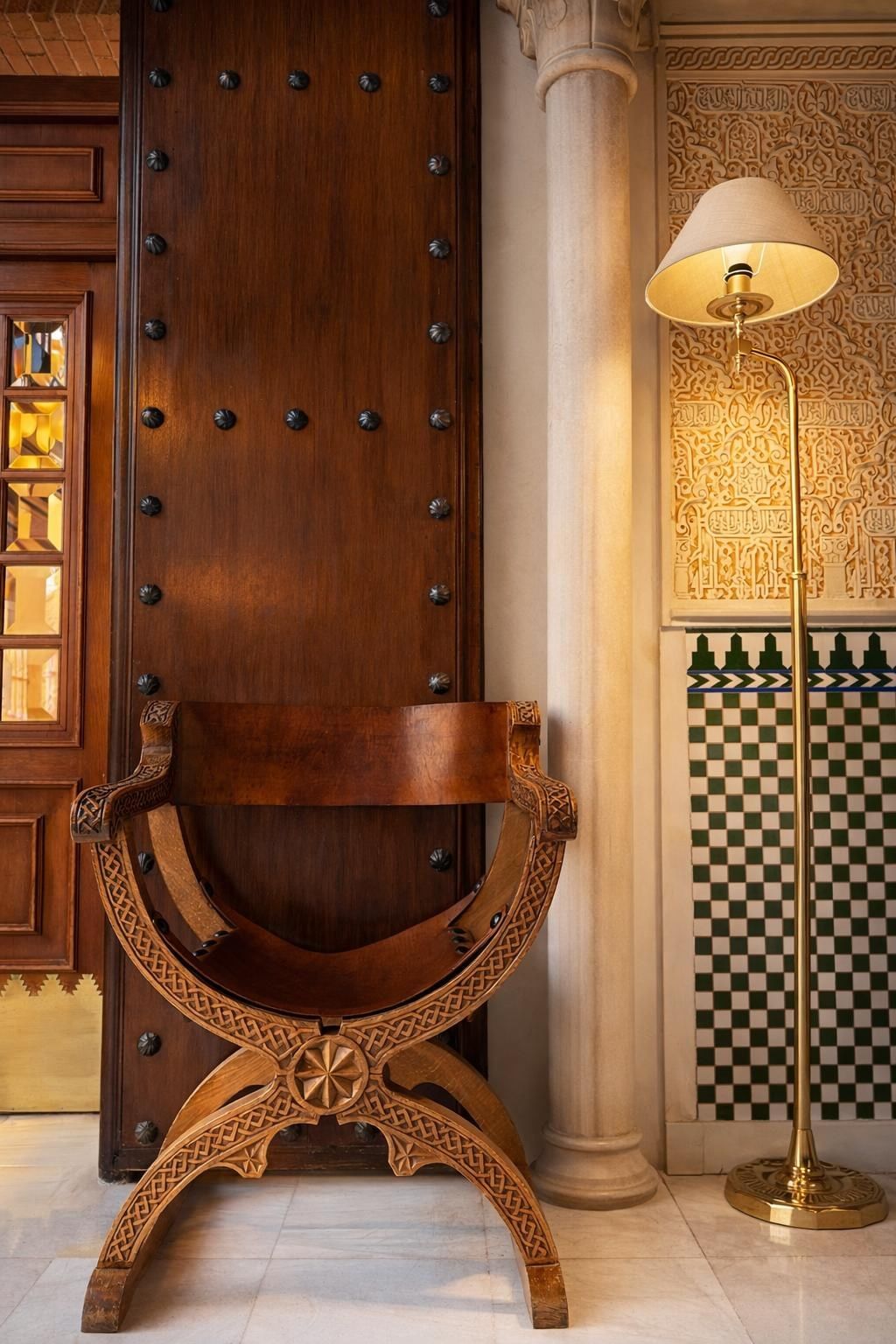
It is fascinating to see how this model continues to be reinterpreted in contemporary interior design, with its legacy still very much alive today.
Granada, beyond its monumental richness, is defined by the continuity of its traditions. Here, history merges with art in our hands. These are not merely ancient objects, but tangible expressions of a cultural fusion that continues to shape the city’s identity.
The Hotel Alhambra Palace stands as a testament to that legacy. More than a century later, we remain faithful to the traditions and customs that define us, while adapting to modern needs.
We invite you to visit us on your next trip to Granada — to enjoy an afternoon coffee or to take refuge from a cold winter day while admiring the views and artistry of a truly unique city.
We look forward to welcoming you and continuing to discover Granada together.