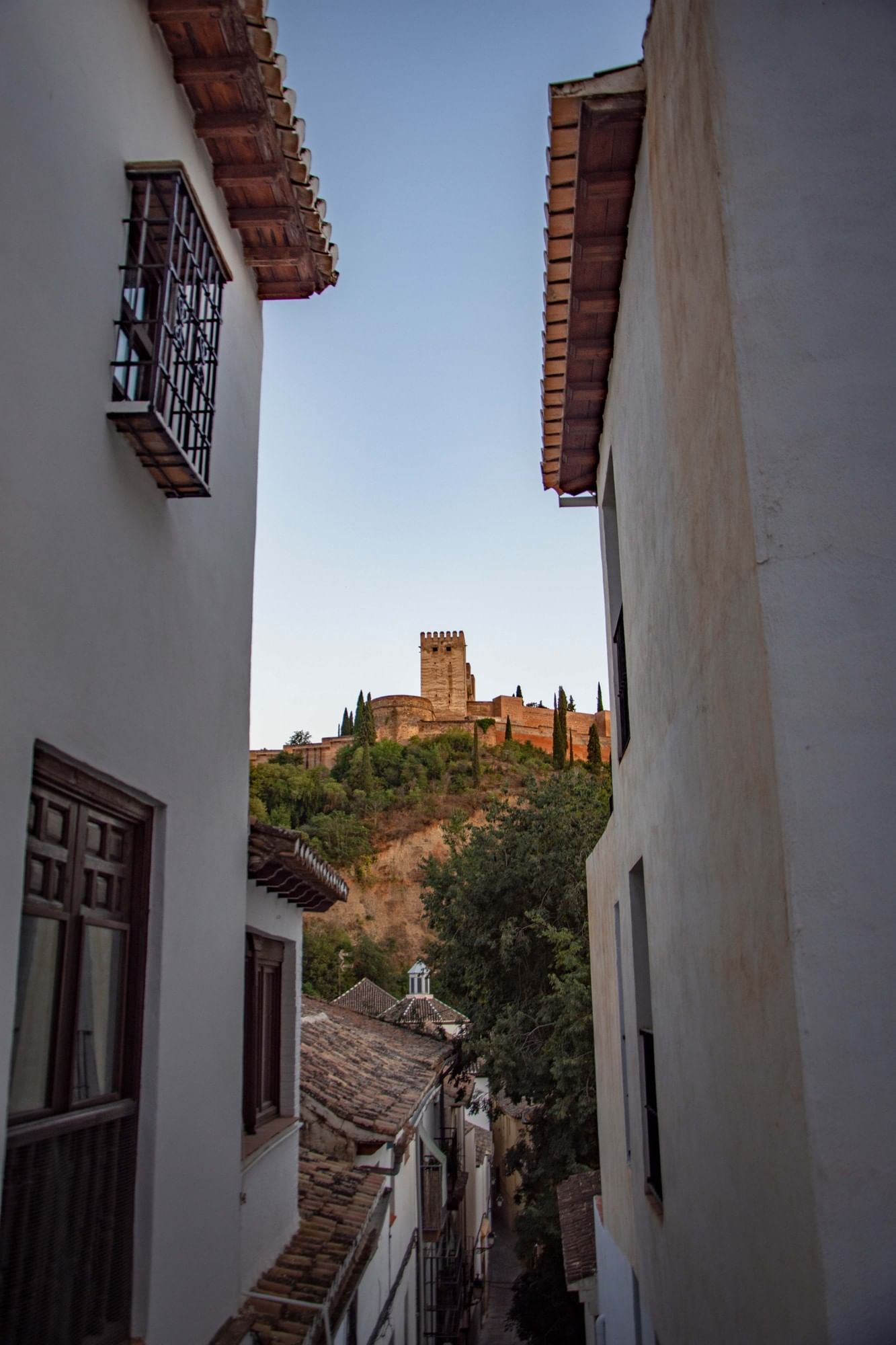
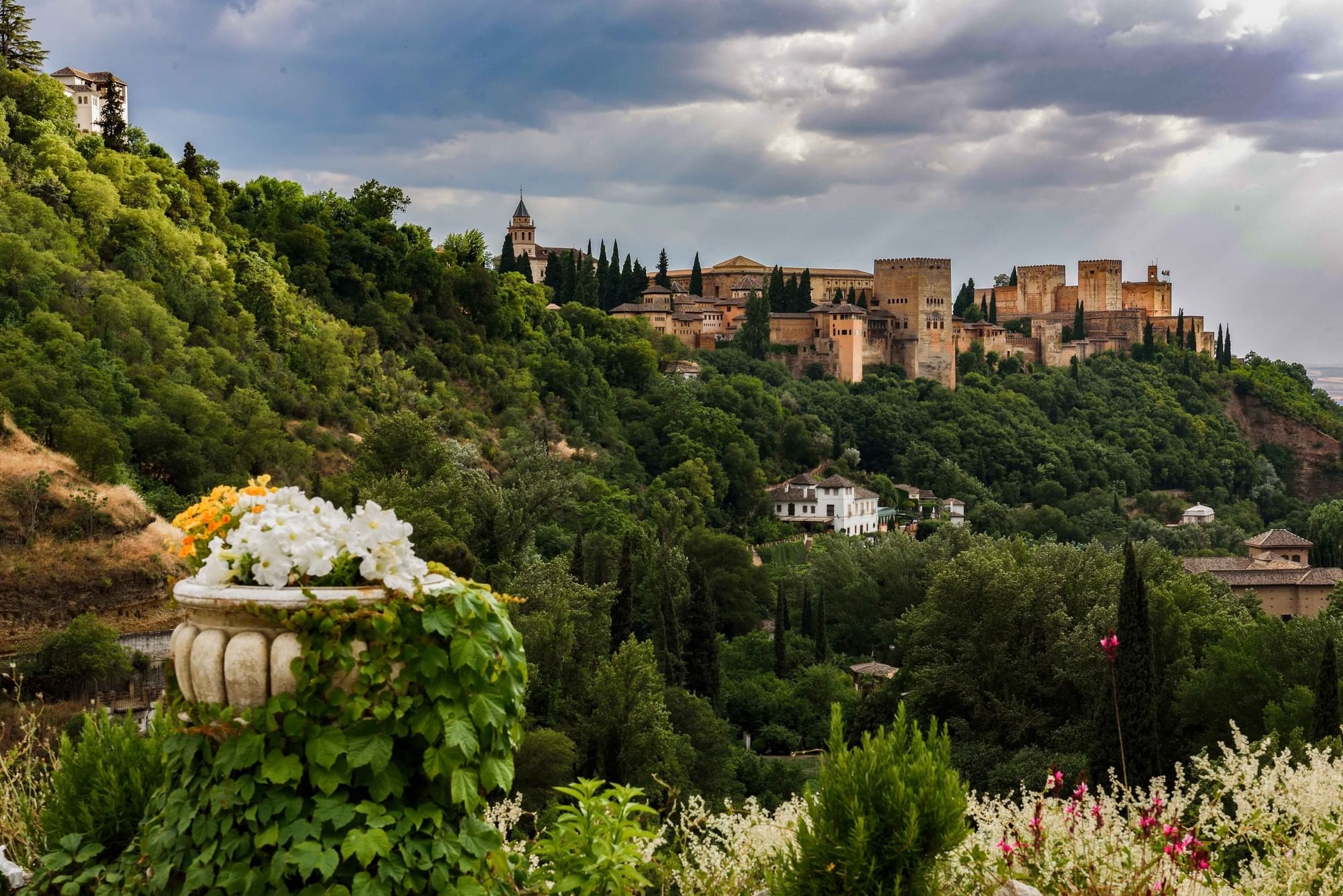
The Alhambra, the “Red Fortress”, is the second most visited monument in Spain, world-renowned and overlooking the modern city of Granada. It is not only one of the most visited landmarks, but also a universe of details, symbols, and secrets that have endured for centuries.
Its stunning Generalife Gardens—once the summer palace of the emirs who ruled this part of Spain during the 13th and 14th centuries—hide stories that often go unnoticed.
If you are planning your visit to the monument and the city, or considering returning, the following curiosities will make you see the Alhambra from a different perspective.
The Alhambra: Where Every Detail Has Meaning
Every inscription, carving, and decorative detail in the Alhambra is full of meaning. Designed to be admired in the Nasrid Palaces, these elements combine Islamic art, spiritual symbolism, and the political power of the Nasrid dynasty. Visitors to the Alhambra in Granada can witness firsthand how every detail was carefully crafted to convey beauty, devotion, and authority, making it one of the most extraordinary examples of Islamic architecture in Spain
In so many ways, the palace can be seen as a “written poem”. This is remarkable for any visitor, but for lovers of history and art, witnessing such beauty in person centuries later is truly invaluable.
Geometric and vegetal patterns intertwine with inscriptions carved in wood, stucco, and ceramics. These inscriptions combine religious devotion with the legitimisation of Nasrid sultans’ power, reflecting a perfect balance between spirituality and political pride.
The Court of the Lions: Secrets Behind an Icon
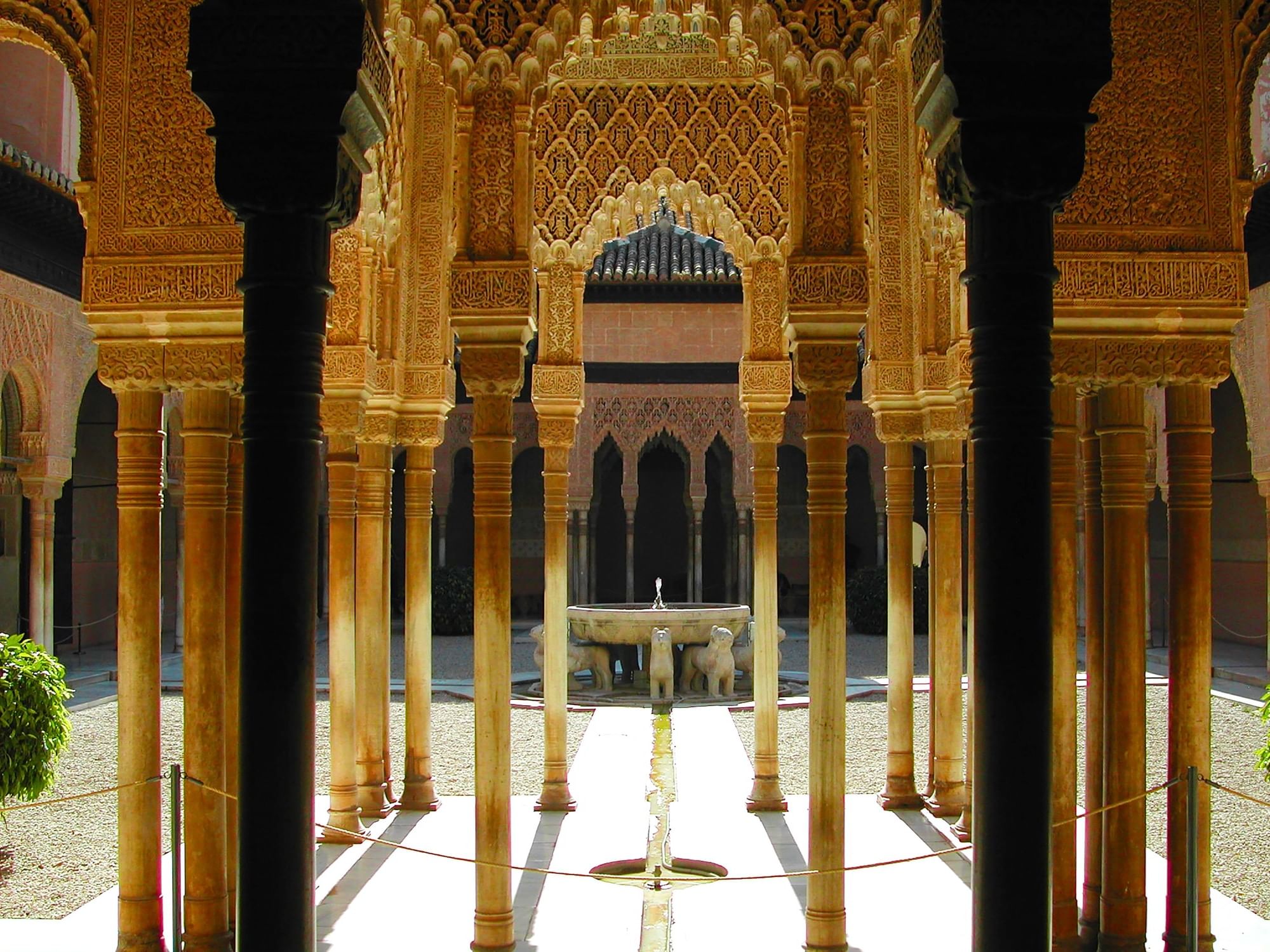
The Court of the Lions is one of the most iconic highlights of the Alhambra in Granada and a must-see for visitors. Built in the 14th century, its twelve marble lions—each uniquely carved—symbolise strength, power, and protection within the Nasrid Palaces, making it one of the finest examples of Islamic art in Spain.
Over the centuries, the famous Lion Fountain has been dismantled and restored several times to preserve its structure and intricate details.
Despite extensive research, the origin of the Court of the Lions remains a subject of debate among historians. Today, it stands as a lasting symbol of the Nasrid dynasty’s splendour and one of the most remarkable sights to visit in the Alhambra.
Water in the Alhambra: Design, Function and Symbolism
The Alhambra in Granada is strategically located between the Darro and Genil rivers. Its water system, a remarkable example of Nasrid engineering, relied on a network of irrigation channels that carried water from the Darro Valley to the entire complex .
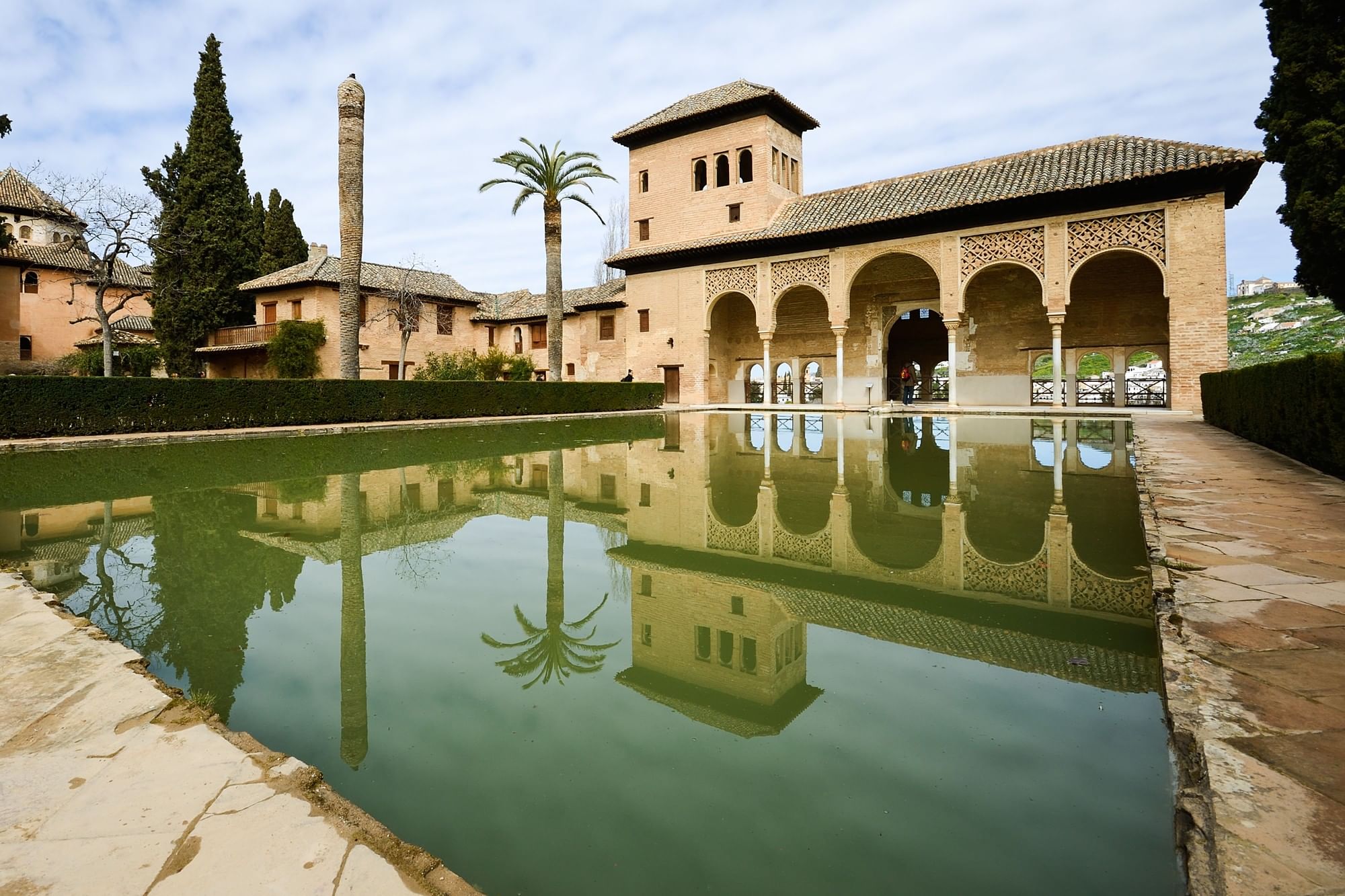
Beyond its essential function, water has always played, and still plays, a key role. Throughout the Alhambra and its gardens, you will find fountains, channels, pools, and reflecting basins that help regulate temperature and create a serene atmosphere.
The sound of water is no coincidence either; it forms part of the sensory experience, what we now commonly refer to as “white noise”.
Some of the spaces where water takes centre stage include the Court of the Lions, the Comares Palace, and the Partal Gardens.
Is the Alhambra Only a Fortress?
The Alhambra in Granada is instantly recognisable, but it is far more than a single monument. In reality, it was a self-sufficient city and the political heart of Nasrid power.
We often refer to “the Alhambra” as if it were a single monument, when in fact it is a true palatine city. Within its walls coexisted palaces, gardens, baths, and military areas. In short, it was a independent city where the Nasrid court lived separately from Granada.
It was divided into three main areas: the Alcazaba, the Medina, and the Nasrid Palaces (Dar al-Sultan, the royal residence). Its location—like almost everything in this extraordinary complex—was no coincidence. It was built on the Sabika hill, where architecture blends seamlessly with nature and landscape, shaping the unique environment we see today.