In the streets of Granada, the sophistication of Nasrid architecture coexists with the grand constructions of the Renaissance, the ornamental richness of the Baroque and the reinterpretations of the city’s past that emerged during the 19th and 20th centuries. Here, history does not remain confined to museums: it is lived in the streets.
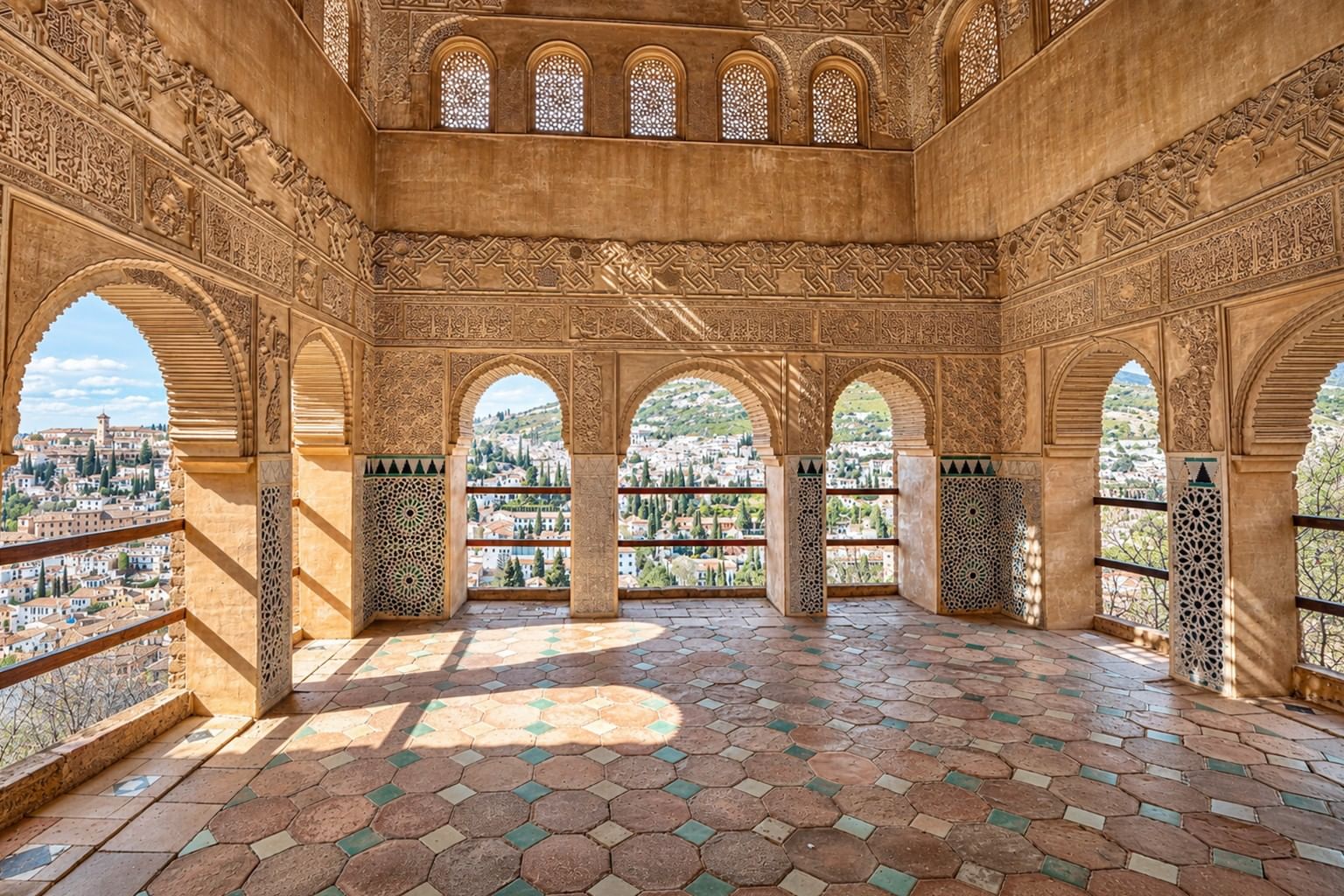
From the ancient walls of the Albaicín to the Palace of Carlos V; from the intimacy of patios and "cármenes" to the monumental presence of churches, palaces and buildings that arrived with modernity, Granada is a city that continues to build and reinvent itself. Within this more recent past, Hotel Alhambra Palace occupies a place of its own in Granada.
At the beginning of the 20th century, through its Neo-Nasrid style, Hotel Alhambra Palace reinterpreted the heritage of the Alhambra from a more contemporary perspective, adapted to its time. In doing so, it became one of the city’s most distinctive and singular buildings.
Hotel Alhambra Palace was conceived as a place from which to see the Alhambra with your own eyes and, without a doubt, to become part of the architectural history of Granada.
Discovering Granada through its architecture
Discovering Granada’s architecture means understanding the different ways in which the city has expressed beauty, power, intimacy and its relationship with the landscape. It is a journey through Granada that invites us to discover more about its culture.
The Alhambra: the starting point
Any journey through the architecture of Granada begins at the Alhambra. While it is the jewel of Nasrid architectural language and a universal monument, its architecture — together with light, water, vegetation and landscape — creates an extraordinary architectural experience in itself.
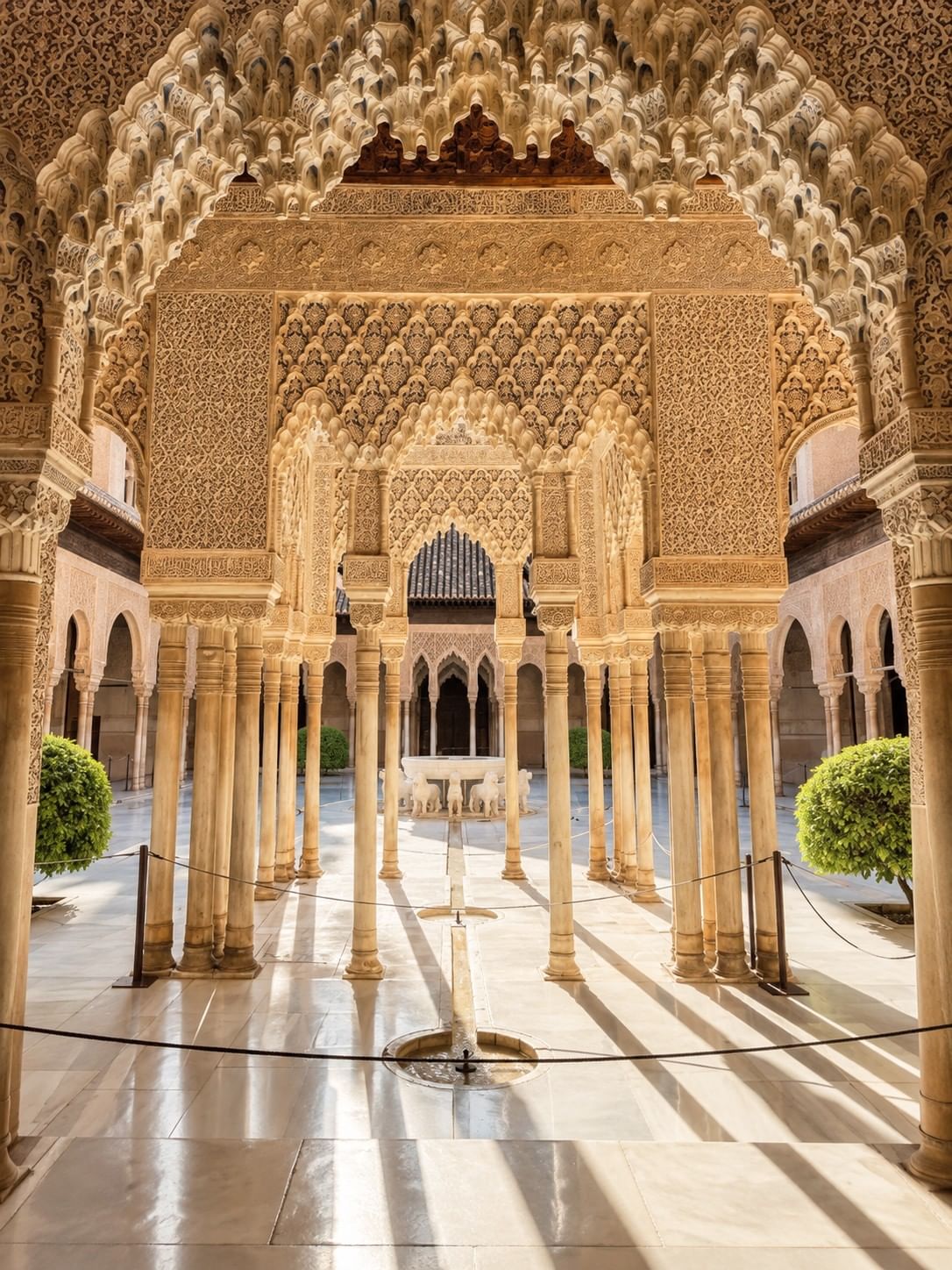
The Alhambra represents an architecture deeply connected to its surroundings. It cannot be understood separately from the Sabika Hill, beside Hotel Alhambra Palace, or from the spectacular Sierra Nevada stretching out below it.
Its influence on architecture has been so profound that it became part of a tradition whose legacy can be found in other parts of Granada and which, centuries later, was and continues to be reinterpreted by architects and artists fascinated by the Nasrid heritage.
Granada Cathedral: beyond the Monument
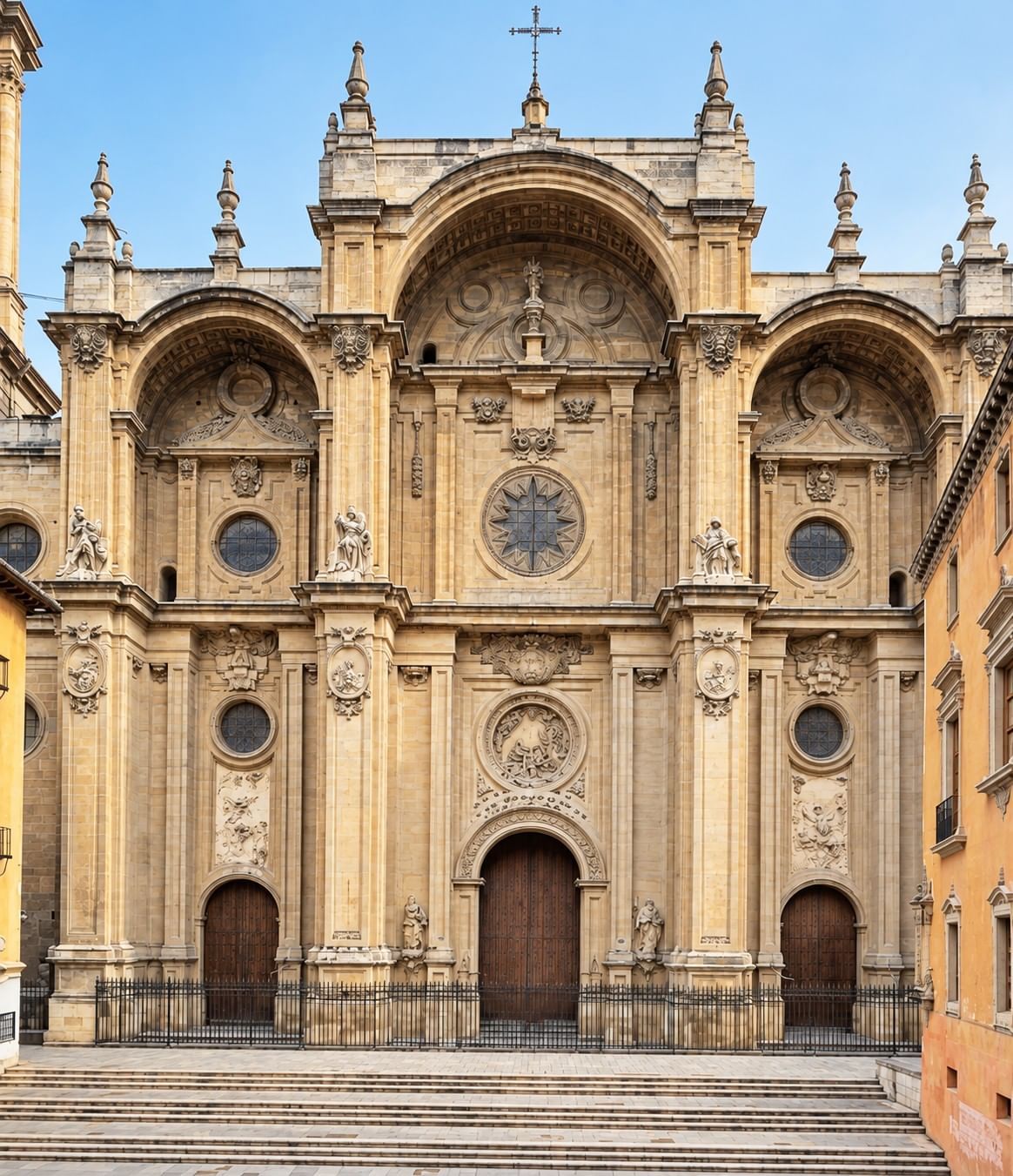
Granada Cathedral is one of the great symbols of the city. Construction began after the conquest of Granada in 1492, and it is considered the first Renaissance church in Spain.
During your visit to Granada, you can admire its façade overlooking Plaza de las Pasiegas and, above all, its interior, which reveals the ambition of the project. The light, proportions and scale of the space create an experience completely different from that of the palaces of the Alhambra.
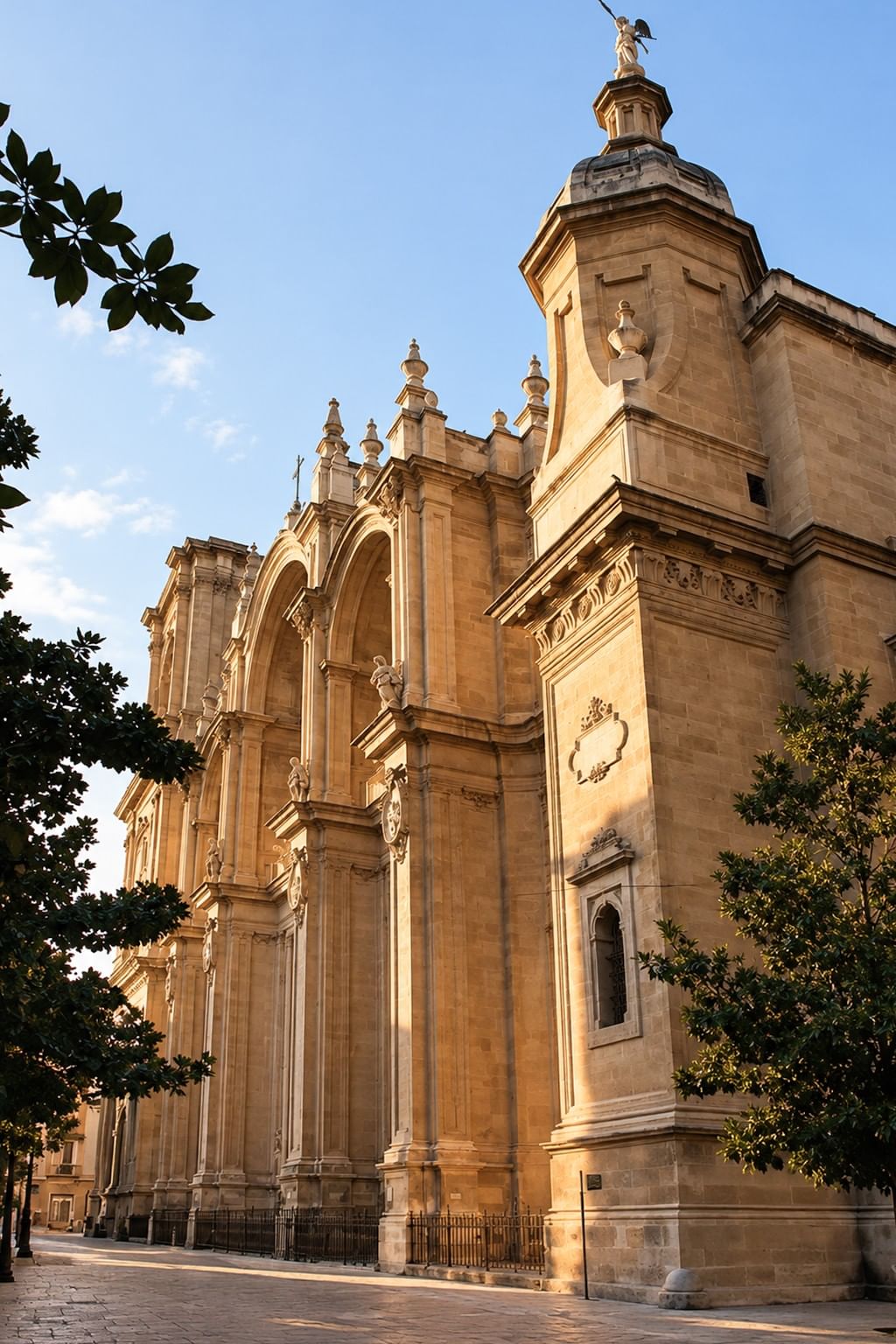
And this is one of Granada’s great architectural attractions: within just a few kilometres, it is possible to move between two architectural worlds born from very different historical contexts and yet belonging today to the same city.
Hotel Alhambra Palace: the architecture of an icon
In early 20th-century Granada, a building would emerge that would later become one of the city’s most emblematic landmarks of tourism, distinguished above all by its architecture: Hotel Alhambra Palace.
Our hotel was established at a time when Granada was beginning to emerge as a destination for travellers from across Europe and the rest of the world. There were several reasons for this, but above all, the fascination with the Alhambra.
Beside it, a building was created that incorporated references to Hispano-Muslim tradition and elements inspired by Nasrid architecture.
At Hotel Alhambra Palace, you will find battlements, arches, geometric decoration, plasterwork, mosaics and other elements of inspiration that create a distinctive identity, recognisable even from a distance.
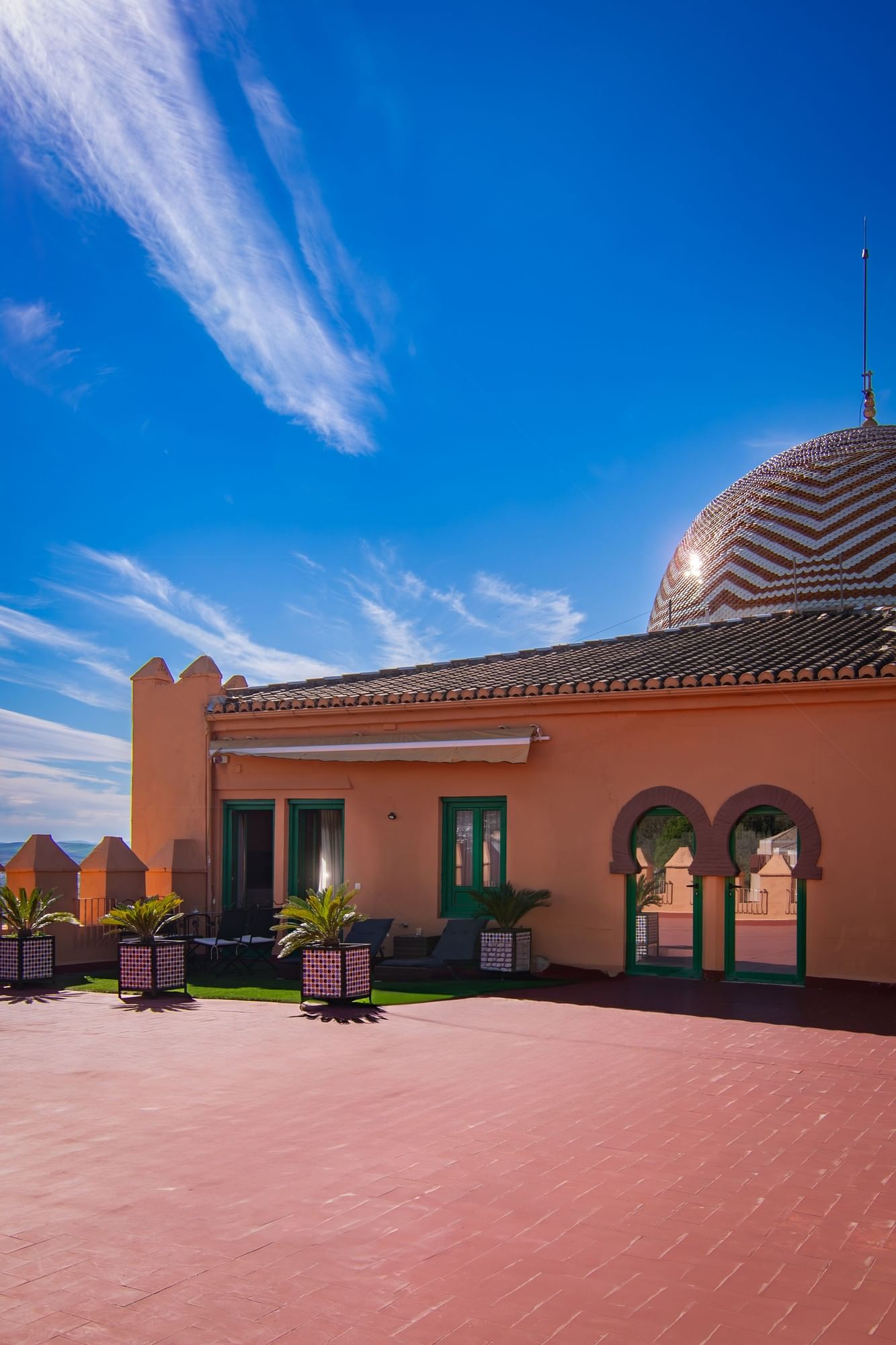
Its position is an essential part of its architecture. From here, Hotel Alhambra Palace offers a special connection with Granada and its most characteristic elements: the Vega, Sierra Nevada and, above all, the Alhambra.
Hotel Alhambra Palace represents a very specific moment in Granada’s architectural history: the moment when the city began to transform its own past into inspiration for a new architecture connected to the birth of modern tourism.
The Rodríguez-Acosta Foundation: another way of understanding architecture in Granada
The building that houses the Rodríguez-Acosta Foundation is located very close to the Torres Bermejas and also near the Alhambra. From the viewpoints of Hotel Alhambra Palace, its silhouette can be admired as part of the landscape of the hill, particularly at sunset.
Built between 1916 and 1930, the project involved several architects, including Modesto Cendoya, who was municipal architect of Granada and, from 1907 to 1923, architect-director of the Alhambra.
As a result, during the period in which both Hotel Alhambra Palace and the Rodríguez-Acosta Carmen were being built, Cendoya occupied a particularly relevant position within Granada’s architectural landscape.
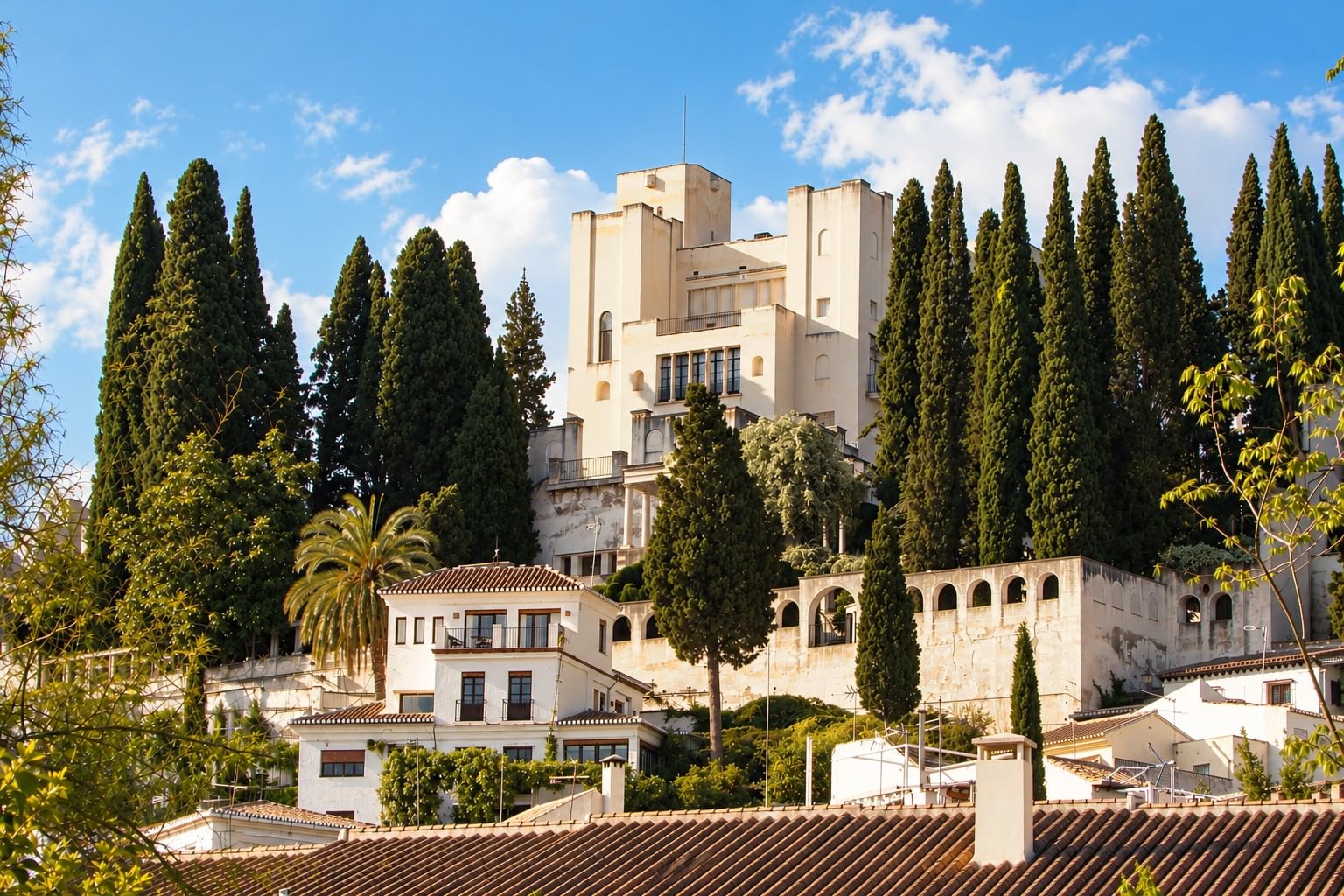
Its architecture is organised around courtyards, terraces, gardens, galleries and carefully composed perspectives that turn the journey through the building itself into an experience. It is undoubtedly a building that represents modernity in Granada without renouncing the memory of the city.
The Monastery of San Jerónimo: the elegance of the Renaissance
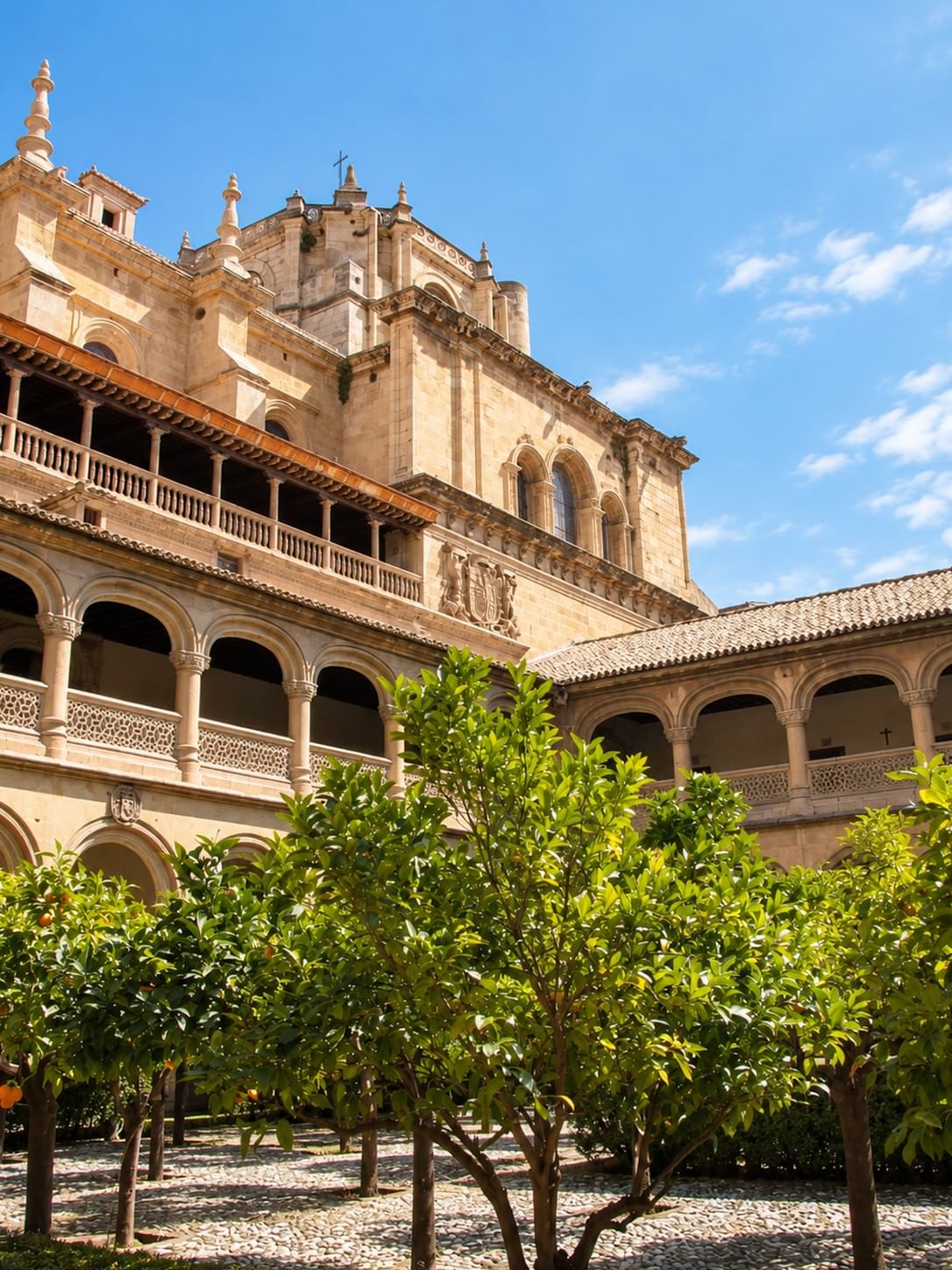
The Monastery of San Jerónimo is one of the buildings that best illustrates the transition from Nasrid Granada to Christian Granada and is considered one of the city’s Renaissance treasures.
Its cloister, church and impressive sculptural decoration reveal the extent to which the Renaissance transformed the city’s religious architecture.
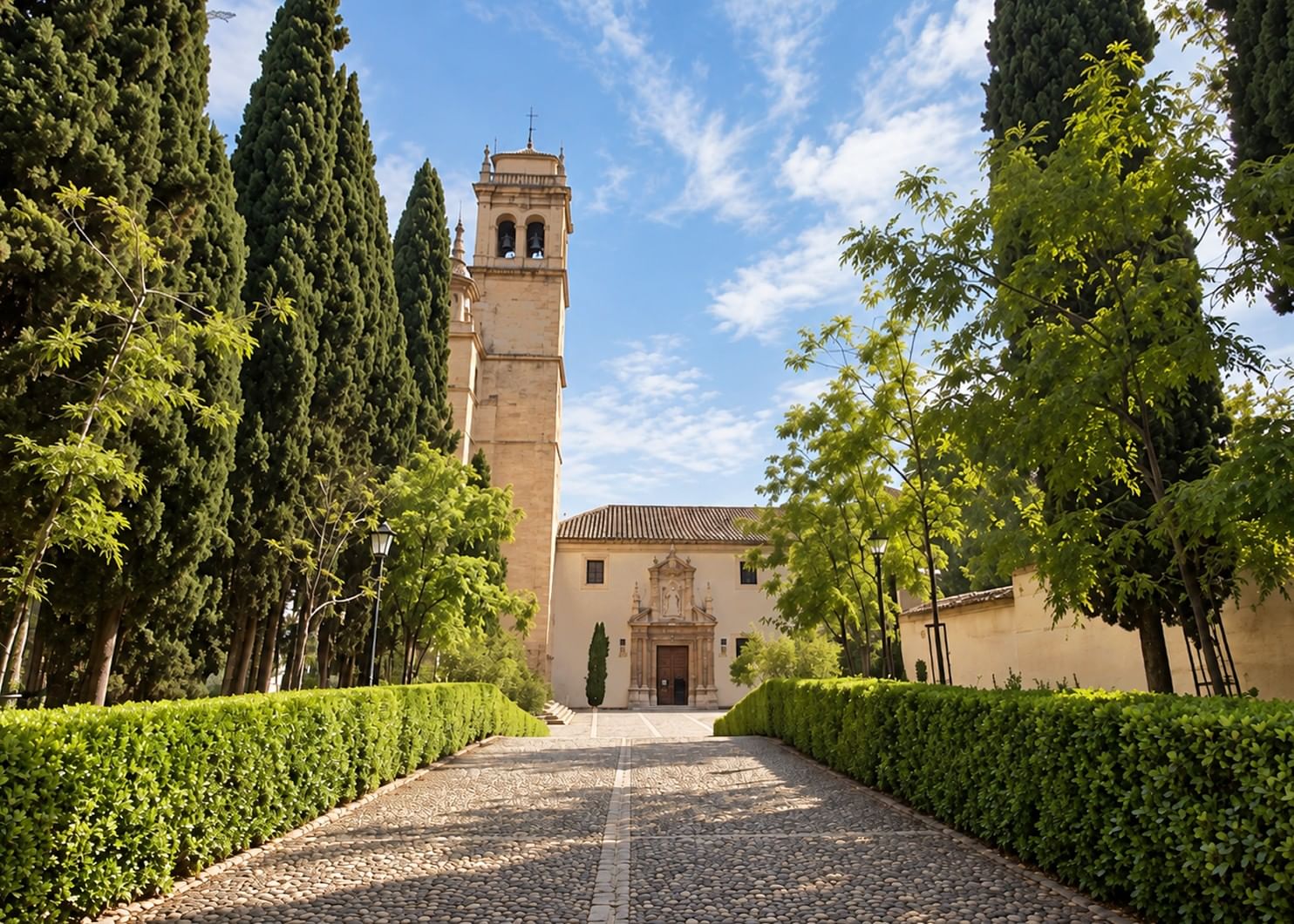
It was the Catholic Monarchs who founded the monastery. In 1513, while small Gothic elements could still be found in its architecture, the building underwent a change in style in which Diego de Siloé, one of the key figures of the Spanish Renaissance, played a prominent role.
La Cartuja: a Baroque icon
The Monastery of Nuestra Señora de la Asunción de la Cartuja is one of Granada’s great monumental complexes and one of the most important works of Andalusian Baroque architecture. Its sober exterior gives little indication of what awaits inside.
Its history goes back to a figure closely linked to Granada at the beginning of the 16th century: El Gran Capitán, Gonzalo Fernández de Córdoba.
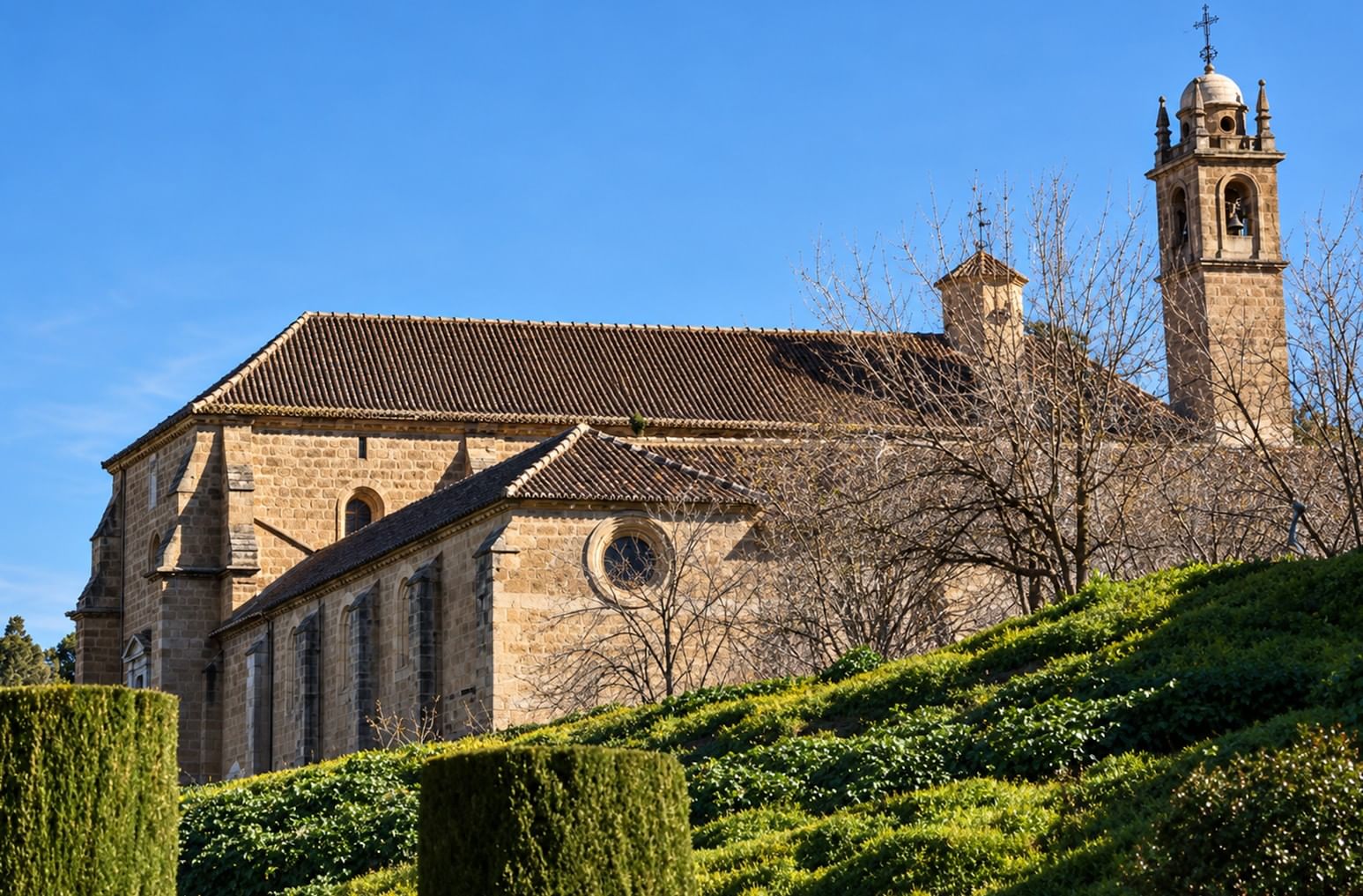
What we can visit today is only part of the original project, which was built over approximately three centuries. The monastery remained inhabited by Carthusian monks until 1835, when the community was expelled.
The complex subsequently suffered significant losses. In 1842, the great cloister and the monks’ cells were destroyed, while the Prior’s House disappeared at a later date.
Granada through its architecture
From Hotel Alhambra Palace, we invite you to discover Granada in the best possible way for those who love architecture: not by looking for a single style, but by observing how each period left its own way of seeing and shaping the city.
Because the Granada built around the city after 1492 also possesses an extraordinary architectural and landscape richness.